
24/7 Water Damage Restoration in Northwest Indiana: What Happens During the First Day
Water damage rarely arrives at a convenient time. A supply line breaks overnight, heavy rain pushes water into a lower level, a water heater fails while you are away, or a backed-up drain sends contaminated water where it does not belong. In Northwest Indiana, where homes and businesses may deal with humid summers, strong storms, lake-effect weather, aging plumbing, crawlspaces, basements, and mixed residential and commercial building types, the first day matters.
The goal during the first day is not to make the property look perfect. The goal is to make it safer, stop the water from spreading, remove as much moisture as practical, document the damage, and begin a drying plan before hidden materials become a bigger problem. If you are calling for water damage restoration in Northwest Indiana, here is what typically happens from the moment you notice the problem through the end of the first day.
What 24/7 Water Damage Restoration Looks Like on Day One
With 24/7 water damage restoration, the process begins with an emergency call, not with a scheduled estimate days later. A restoration team needs to understand what happened, whether water is still entering the property, and whether there are immediate safety concerns. The first conversation helps prioritize the response and gives you practical steps to take while help is on the way.
You may be asked questions such as:
- Where is the water coming from?
- Has the source been stopped, if it is safe to do so?
- Which rooms or levels are affected?
- Is the water clean, dirty, or possibly sewage-contaminated?
- Are there electrical hazards, sagging ceilings, slippery floors, or strong odors?
- Is the property occupied, and are children, older adults, pets, or employees present?
If you can safely shut off the water supply, move small valuables, or avoid affected areas, those steps may reduce further damage. However, you should not walk through standing water near electrical outlets or appliances, lift wet carpet if you are unsure what is underneath, or handle sewage-contaminated materials without proper protection.
In Northwest Indiana communities such as Hammond, Gary, Portage, Valparaiso, Chesterton, and surrounding areas, water can affect many different property layouts. Some homes have basements that collect stormwater or plumbing leaks. Others have crawlspaces, slab foundations, attached garages, or commercial tenant spaces where water can travel under walls. The first-day response has to fit the actual structure, not a one-size-fits-all checklist.
Step One: Safety, Source Control, and Initial Inspection
When restoration technicians arrive, the first priority is safety. Water damage can create hazards that are not obvious at first glance. Saturated drywall may weaken, flooring can become slick, ceiling materials can hold water, and electrical systems may be affected. If the water came from a drain backup, toilet overflow, or sewer line, the contamination level changes how the crew works and what materials may need to be removed.
The team will look for the water source and confirm whether it has stopped. For plumbing failures, that may mean checking shutoff valves or identifying the affected fixture or appliance. For storm-related water intrusion, it may involve locating where water entered, such as around a foundation, door, window, roofline, or lower-level opening. Restoration professionals do not replace licensed plumbers, roofers, or electricians when specialized trade work is needed, but they can help stabilize the damage and identify what must be addressed.
Moisture Inspection Is More Than Looking for Puddles
Visible water is only part of the problem. During the first inspection, technicians may check baseboards, drywall, carpet, padding, wood flooring, cabinets, ceilings, and adjoining rooms for moisture migration. Water can travel under flooring, behind walls, and into insulation. In humid Northwest Indiana weather, materials may not dry quickly on their own, especially in closed rooms, finished basements, or commercial spaces with limited ventilation.
The inspection helps define the affected area. It also helps determine the water category, the type of materials involved, and whether demolition, extraction, drying, cleaning, or sanitizing steps are needed right away.
Step Two: Documentation for the Property and Insurance Process
Before major removal work begins, the first day usually includes documentation. This may include photographs, notes about affected rooms, moisture readings, and a basic record of damaged materials. If you plan to file an insurance claim, this early documentation can be helpful because water damage often changes quickly as materials are removed and drying equipment is set.
You should also take your own photos and videos if it is safe. Capture the source of the water if visible, standing water, wet flooring, damaged belongings, and affected walls or ceilings. Do not delay emergency mitigation just to gather more pictures, but a reasonable record can help you communicate with your insurer.
Keep receipts for emergency expenses, make notes about when you discovered the damage, and write down what actions were taken to stop the water. Restoration companies often work with property owners during the claims process, but your insurance carrier makes coverage decisions based on your policy and the facts of the loss.
Step Three: Water Extraction and Removal of Unsalvageable Materials
Once the affected area is assessed and it is safe to proceed, crews begin removing water. Extraction is one of the most important first-day steps because the longer water remains in contact with building materials, the more likely it is to spread, stain, swell, delaminate, or support microbial growth.
Depending on the situation, extraction may involve removing standing water from hard surfaces, pulling water from carpet, addressing wet padding, or clearing water from lower areas. In basements and commercial spaces, water may collect in corners, under shelving, around mechanical rooms, or along wall lines. In homes with wood flooring or laminate, trapped moisture can cause cupping, buckling, or separation if it is not addressed promptly.
What Gets Removed on the First Day?
Not every wet material is automatically removed. The decision depends on the source of water, the material type, the amount of saturation, and whether drying is practical. Clean water from a supply line is handled differently than water from a sewer backup or long-standing floodwater.
Materials that may be removed during the first day include:
- Wet carpet padding that cannot be effectively dried or sanitized
- Baseboards that trap moisture behind walls
- Damaged drywall sections, especially if water has wicked upward
- Insulation that holds moisture
- Contaminated porous materials after sewage or dirty water exposure
- Unsanitary debris or damaged contents that cannot be restored
Removal can feel disruptive, especially when walls or flooring are involved, but selective removal often helps the structure dry more thoroughly. It can also reduce odors and prevent moisture from staying hidden behind finished surfaces.
Step Four: Drying Equipment, Airflow, and Moisture Monitoring
After extraction and necessary material removal, the drying phase begins. This is where professional restoration differs from simply opening windows or running a household fan. Drying is a controlled process that uses airflow, dehumidification, and ongoing checks to lower moisture in building materials and indoor air.
In Northwest Indiana, outside air may not always help. During humid summer weather, opening windows can introduce more moisture. During cold or snowy conditions, outside air can create comfort and safety issues. A restoration team will choose drying methods based on the season, the building, and the moisture conditions inside the property.
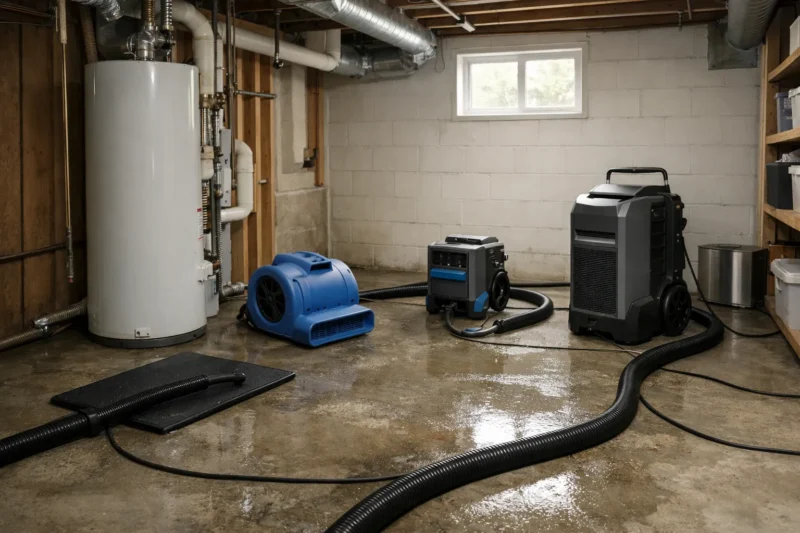
Equipment placement matters. Air movers may be positioned to direct airflow across wet surfaces. Dehumidifiers may be used to pull moisture from the air so materials can release trapped water. In some cases, containment may be set up to focus drying in affected areas. The first day usually establishes the drying plan, but the property will need follow-up monitoring to confirm progress.
Moisture monitoring is important because a surface can feel dry while the material beneath remains damp. Drywall, subflooring, trim, and cabinets can all hold moisture differently. The restoration team may adjust equipment, remove additional materials, or change the drying setup as readings change.
How Water Type Changes the First-Day Plan
One of the biggest factors in 24/7 water damage restoration is the type of water involved. The first day for a clean water leak is not the same as the first day for a sewage backup. The more contaminated the water, the more emphasis there is on protection, removal, cleaning, and sanitization.
Clean Water From a Supply Source
Clean water may come from a broken supply line, overflowing sink, or failed appliance supply hose. Even when the water starts clean, it can become less sanitary as it contacts flooring, dust, building materials, or other contaminants. Fast extraction and drying are still important.
Gray Water From Appliances or Drains
Gray water may contain residues, soaps, food particles, or other contaminants. Dishwasher leaks, washing machine overflows, and some drain issues can fall into this range. These situations may require more cleaning and more cautious material decisions than a simple supply leak.
Sewage or Highly Contaminated Water
Sewage backups and contaminated water require a more protective approach. Porous materials may not be salvageable, and affected areas need cleaning and sanitization after removal and extraction. If your loss involves a toilet overflow with waste, a sewer line backup, or water with a strong sewage odor, avoid contact and keep people out of the area until it is evaluated.
911 Restoration of Northwest Indiana provides related services beyond drying, including sewage cleanup, sanitization, and mold services when conditions call for them. If you are unsure what kind of water you are dealing with, treat it cautiously until professionals can assess it.
What You Can Do Before and During the First Day
Property owners often want to help immediately, and there are safe steps that can make a difference. The key is to avoid putting yourself at risk or accidentally spreading contamination.
If it is safe, consider these actions:
- Stop the water source by shutting off a local valve or the main water supply.
- Turn off electricity to affected areas only if you can do so safely from a dry location.
- Move small, dry valuables away from the affected area.
- Place foil, plastic, or blocks under furniture legs if floors are wet and the furniture cannot be moved.
- Lift curtains, bedding, or fabric items away from wet flooring.
- Take photos and videos before items are moved, if it is safe.
- Keep children, pets, tenants, or employees away from wet and contaminated areas.
Avoid using a household vacuum to remove water. Do not enter rooms with sagging ceilings, visible electrical hazards, or sewage-contaminated water. Do not assume that a floor is safe just because the water is shallow. Water can hide openings, loosen flooring, or make steps and transitions slippery.
If you manage a business, the first day also includes communication and access planning. You may need to protect inventory, separate safe areas from affected ones, and coordinate with employees or tenants. For commercial properties, professional water damage restoration services can help stabilize the building while reducing unnecessary disruption where possible.
Common Northwest Indiana Water Damage Scenarios
Water damage in Northwest Indiana can come from many sources. The region sees seasonal weather shifts, heavy rains, humidity, snowmelt, and lake-effect conditions, along with everyday plumbing and appliance failures. Properties in dense urban areas, smaller towns, and rural communities may have very different vulnerabilities.
Common first-day restoration calls may involve:
- Basement water after heavy rain or drainage problems
- Sump pump failures in homes that rely on pumps during wet periods
- Water heater leaks in utility rooms, basements, or garages
- Washing machine or dishwasher overflows
- Frozen or burst pipe concerns during cold weather
- Roof or window leaks after storms
- Toilet overflows and sewer backups
- Commercial restroom, breakroom, or mechanical room leaks
The building’s age and construction affect the restoration plan. Older homes may have layered flooring, plaster, additions, or previous repairs that influence how water moves. Newer properties may have open floor plans where water spreads quickly across connected spaces. Commercial buildings may have shared walls, ceiling systems, and equipment areas that need careful inspection.
Because moisture can move beyond the obvious puddle, a first-day inspection should include adjacent rooms, lower levels, wall cavities, and hidden spaces where practical. In many water losses, the difference between a limited cleanup and a larger restoration project is how quickly hidden moisture is found and addressed.
Why the First Day Matters for Mold Prevention and Long-Term Damage
Mold prevention is one of the major reasons to act quickly after water damage. Mold needs moisture and a suitable surface to grow, and many building materials can provide both when they stay damp. While not every water loss becomes a mold problem, delayed drying increases the risk.
First-day mitigation helps by removing standing water, reducing indoor humidity, opening wet assemblies where needed, and starting targeted drying. It also helps reduce secondary damage such as swollen trim, staining, odors, damaged flooring, and moisture migration into unaffected rooms.
It is also important not to cover up water damage too soon. Painting over stains, reinstalling flooring, or closing walls before materials are dry can trap moisture. A property may look normal while dampness remains behind the finish. That is why monitoring and follow-up visits are part of a responsible drying process.
If you notice musty odors, visible growth, or recurring moisture after a water loss, the property may need additional assessment. Restoration is not just about removing what you can see; it is about returning the affected area to a cleaner, drier, safer condition.
What Happens After the First Day?
By the end of the first day, the emergency phase is usually underway. The water source should be stopped or isolated, unsafe conditions identified, standing water extracted where possible, unsalvageable materials removed as needed, and drying equipment placed. The property may still be noisy, partially opened, and inconvenient, but the situation should be more controlled than when the loss was discovered.
The next steps often include continued drying, moisture checks, cleaning, odor control, sanitization if needed, and planning for repairs. Some materials can be dried in place, while others may need replacement. The scope depends on the water source, duration, contamination level, and how far moisture traveled.
Throughout the process, keep asking questions. You should understand which rooms are affected, why materials are being removed, how drying progress will be checked, and what needs to happen before repairs begin. A good restoration plan gives you a clearer path forward during a stressful event.
For emergency help, contact 911 Restoration of Northwest Indiana. For 24/7 water damage restoration in Northwest Indiana, call 911 Restoration of Northwest Indiana at (219) 255-4163.
FAQ
Should I wait until morning if I find water damage overnight?
It is usually better to call as soon as you discover the problem, especially if water is still spreading or the source is unknown. Early guidance can help you take safe steps and reduce the chance of hidden moisture becoming a larger issue.
Can I dry water damage myself with fans?
Small surface spills may dry with basic cleanup, but building materials often hold moisture below the surface. Household fans do not remove humidity the way restoration drying equipment can, and they may spread contaminants if the water is dirty or sewage-related.
Will all wet drywall and flooring need to be removed?
Not always. Removal depends on the water source, contamination level, saturation, material type, and whether the material can dry properly. Some materials can be dried in place, while others are removed to prevent trapped moisture and sanitation problems.
What should I tell my insurance company after water damage?
Report when you discovered the damage, what caused it if known, which areas are affected, and what emergency steps were taken. Share photos, videos, and restoration documentation when available, and ask your carrier how they want you to proceed under your policy.
Is sewage backup handled the same way as a clean water leak?
No. Sewage and highly contaminated water require additional precautions, removal of certain porous materials, cleaning, and sanitization. Keep people and pets away from the affected area and avoid direct contact until it has been professionally evaluated.
 English
  Spanish