Commercial Restoration Services Valparaiso And Portage Businesses Can Plan For
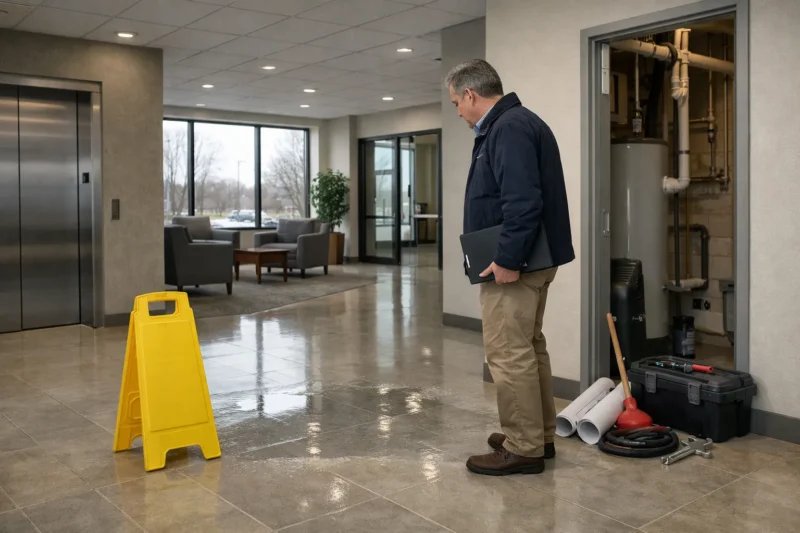
When a pipe breaks above a retail floor, smoke spreads through an office suite, or heavy rain backs up a drain near a warehouse entrance, the damage is more than a maintenance issue. For a business in Valparaiso or Portage, property damage can interrupt operations, affect employees and customers, and create decisions that have to be made quickly under pressure.
The best time to think through those decisions is before the loss happens. Commercial properties in Northwest Indiana face a mix of risks: severe thunderstorms, lake-effect weather, freezing conditions, older plumbing in established buildings, flat-roof drainage problems, and heavy use of restrooms, kitchens, utility rooms, and mechanical systems. A written plan helps your team act quickly, protect occupants, preserve important records, and start the restoration process with fewer delays.
For property managers, facility directors, business owners, landlords, and tenants, disaster planning does not have to be complicated. It should answer practical questions: Who shuts off the water? Where are the electrical panels? Which areas must reopen first? Who communicates with employees, tenants, vendors, and customers? The clearer those answers are now, the less confusion there is after damage occurs.
Commercial Restoration Services Valparaiso And Portage Businesses Should Plan Before Damage Happens
Commercial restoration services Valparaiso and Portage businesses rely on are different from ordinary repairs. A restoration project often starts with emergency mitigation: stopping damage from spreading, removing water or debris, improving air movement, separating affected areas, and documenting conditions. Repairs may follow, but the first priority is stabilizing the property and reducing secondary damage.
Commercial buildings also bring complications that a residential loss may not. A single incident can affect tenants, customers, inventory, records, machinery, technology, food-service areas, or shared building systems. In a multi-tenant property, water from one suite can travel through walls, ceilings, and common areas. In a retail or office setting, smoke odor or moisture may affect areas that look clean at first glance.
A restoration plan should account for the main categories of damage that can disrupt a business:
- Water damage: Burst supply lines, roof leaks, appliance failures, sprinkler discharge, sump pump problems, and storm intrusion.
- Fire and smoke damage: Flames, soot, odor, extinguisher residue, and water used to suppress the fire.
- Mold concerns: Moisture trapped behind walls, under flooring, or above ceilings after leaks or humidity problems.
- Sewage and drain backups: Contaminated water from restrooms, floor drains, and sewer lines that requires controlled cleanup.
- Storm damage: Wind-driven rain, roof damage, flooding around entry points, and debris-related issues.
If your organization is reviewing commercial property damage restoration in Northwest Indiana, begin by matching likely hazards to the way your building is actually used. A medical office, restaurant, school, warehouse, municipal building, and retail center each need a different plan.
Local Risks For Commercial Properties In Valparaiso, Portage, And Northwest Indiana
Disaster planning works best when it reflects local conditions. Valparaiso and Portage share many Northwest Indiana weather patterns, but each property’s risk also depends on roof design, drainage, building age, occupancy, and maintenance history.
Heavy Rain, Storms, And Drainage Problems
Thunderstorms can overwhelm roof drains, gutters, parking-lot drainage, and low entry points. Flat and low-slope commercial roofs require special attention because clogged drains can allow water to pond and find weak points around seams, penetrations, HVAC equipment, or parapet walls. Wind-driven rain can also enter around doors, windows, loading docks, and damaged exterior materials.
Storm planning should include roof access procedures, drain inspection schedules, and a way to identify recurring leaks. If your property has had previous water intrusion in the same area, treat it as a planning priority rather than a one-time nuisance.
For broader weather-related planning, review resources on disaster and storm restoration in Northwest Indiana and adapt them to your building’s most vulnerable areas.
Winter Weather And Freeze-Related Water Damage
Northwest Indiana can experience freezing temperatures, lake-effect snow, and rapid weather changes. Commercial buildings are vulnerable when supply lines run through unheated spaces, exterior walls, vacant suites, loading areas, or poorly insulated mechanical rooms. A small frozen line can become a large water loss once it thaws, especially if the building is closed overnight or over a weekend.
Businesses should identify shutoff valves, inspect areas with limited heat, and have a procedure for checking the property after cold snaps. Vacant or lightly occupied areas deserve extra attention because leaks can continue longer before anyone notices them.
Older Buildings, Mixed-Use Spaces, And Shared Systems
Some commercial properties in established downtown areas and older corridors may have aging plumbing, layered renovations, or shared utility paths. Water can move through wall cavities, ceiling voids, and flooring systems in ways that are not obvious from the surface. Mixed-use buildings add another layer of complexity because a loss in one space can affect another occupant’s ability to operate.
In these buildings, emergency plans should include tenant contact lists, access permissions, utility locations, and documentation for areas that are difficult to inspect. If building drawings are incomplete, create a simple map that staff can actually use during an emergency.
Sewage, Restrooms, And High-Use Plumbing
Restaurants, schools, retail centers, offices, warehouses, and public-facing facilities often rely on plumbing systems that see heavy daily use. A drain backup can create a sanitation issue that should not be handled like ordinary clean water. Affected areas may need controlled access, proper removal of contaminated materials, cleaning, and sanitization before the space is returned to use.
Plans should identify who can close restrooms or affected areas, how employees and customers will be redirected, and what documentation must be gathered for property management or insurance communication.
Build A Commercial Disaster Plan That Your Team Can Actually Use
A useful disaster plan is not a thick binder that sits on a shelf. It is a clear, accessible set of instructions that helps your team make the first good decisions. It should be stored digitally and in printed form, with copies available to people who may be first on site.
Start With Building Information
Create a quick-reference page for each property or suite. Include essential details your staff and restoration professionals may need right away:
- Primary building address and suite numbers.
- Property manager, owner, tenant, and after-hours contact information.
- Water, gas, and electrical shutoff locations.
- Fire alarm and sprinkler system contact procedures.
- Roof access instructions and drain locations, if applicable.
- Mechanical rooms, server rooms, kitchens, records storage, and other sensitive areas.
- Preferred communication chain for employees, tenants, vendors, and customers.
Use plain language. During an emergency, no one should have to interpret vague notes or search through long documents to find the water shutoff.
Prioritize Critical Operations
Not every area of a commercial property has the same urgency. Before damage occurs, identify the spaces that matter most to business continuity. For one company, that may be a production area. For another, it may be a lobby, exam room, server closet, records office, classroom, or kitchen.
Ranking priorities helps a restoration team understand what must be stabilized first when conditions allow. It also helps management decide whether limited operations, remote work, temporary relocation, or phased reopening may be possible.
Plan For Documentation
After property damage, documentation helps everyone communicate clearly. Train your team to record what they can safely observe without entering dangerous areas. Photos, videos, time notes, and maintenance records can help show how the situation developed.
Do not delay urgent mitigation just to gather more documentation, and do not ask employees to enter unsafe areas. The goal is to preserve useful information while protecting people first.
What To Do When Damage Is Discovered
The first steps after water, fire, sewage, or storm damage should focus on safety, source control, and communication. Your exact actions will depend on the incident, but a simple sequence can guide your response.
- Protect people first. Keep employees, customers, tenants, and visitors away from unsafe areas. Watch for slip hazards, electrical risks, smoke, contaminated water, unstable materials, and falling debris.
- Call emergency services if needed. Fire, active electrical hazards, gas concerns, structural danger, or medical issues require the appropriate emergency response.
- Stop the source if it is safe. Shut off water, close a valve, turn off a fixture, or secure an opening only if trained personnel can do so safely.
- Limit access. Close doors, post clear direction for staff, and keep traffic away from wet, smoky, or contaminated areas.
- Notify the decision-makers. Contact the property owner, manager, tenant representative, insurance contact, and restoration provider according to your plan.
- Begin basic documentation. Record the time discovered, visible source, affected rooms, and immediate actions taken.
Commercial restoration services Valparaiso property teams use should support this early decision-making. A good plan gives the restoration team a clear starting point: where to access the building, what areas are critical, what materials may be affected, and who has authority to approve work.
How Restoration Planning Helps Reduce Downtime
Business interruption is often the most stressful part of commercial property damage. Even when the physical damage is limited, uncertainty can slow reopening. Restoration planning helps by turning a chaotic event into a more organized sequence of decisions.
Faster Access To The Right Areas
If keys, gate codes, alarm procedures, and contact permissions are already organized, the restoration process can begin with fewer administrative obstacles. This matters for properties with multiple tenants, restricted areas, or after-hours access concerns.
For businesses in and around Valparaiso, having local service information saved in advance can help managers avoid searching during an emergency. 911 Restoration of Northwest Indiana provides location information for restoration services in Valparaiso that can be added to your internal emergency contact list.
Clearer Decisions About Partial Operations
Some properties may be able to operate in unaffected areas while restoration continues elsewhere. Others may need to close completely until hazards are addressed. A pre-loss plan should identify what conditions are required for safe partial operation, who makes that decision, and how customers or tenants will be notified.
Do not assume that an area is safe because it looks dry or clean. Moisture can remain under flooring or behind walls, and smoke odor can travel through HVAC pathways. Professional assessment helps determine what areas are affected and what controls are needed.
Better Communication With Insurance And Stakeholders
A planned response also improves communication. Insurance carriers, landlords, tenants, franchise groups, lenders, and leadership teams may all need updates. Consistent documentation, clear photos, and organized notes make it easier to explain the scope of damage and the steps being taken.
Assign one person or role to handle updates whenever possible. Multiple people sending conflicting information can create confusion and delay approvals.
Choosing A Restoration Partner Before A Loss
Waiting until damage occurs to choose a restoration provider adds pressure to an already difficult situation. A better approach is to evaluate options before you need them. Your goal is to identify a team that understands commercial priorities, communicates clearly, and can work around the realities of an occupied or revenue-producing property.
When comparing commercial restoration services Valparaiso and Portage organizations may need, ask practical questions:
- Do they handle water, fire, mold, sewage, storm, sanitization, and commercial restoration needs?
- Can they explain how mitigation, cleanup, drying, odor control, and repairs may fit together?
- How do they document affected areas and communicate with property managers or insurers?
- What information do they need from your team before an emergency?
- How will they help separate affected areas from unaffected operations when possible?
- Do they understand the needs of multi-tenant, retail, office, warehouse, restaurant, or public-facing facilities?
Portage businesses, property managers, and facility teams can also save local contact information for commercial restoration support in Portage as part of their emergency plan. The goal is not to predict every possible disaster. The goal is to remove avoidable delays when fast decisions matter.
Maintenance Steps That Support Your Restoration Plan
Disaster planning works best when paired with routine maintenance. You cannot prevent every loss, but you can reduce the chance that a small issue becomes a large disruption.
Consider adding these tasks to your property checklist:
- Inspect roof drains, gutters, downspouts, and scuppers before and after severe weather seasons.
- Check ceilings, exterior walls, and around windows for recurring stains or moisture signs.
- Locate and label shutoff valves so staff can find them quickly.
- Review plumbing in vacant suites, storage rooms, utility closets, and low-traffic areas.
- Keep mechanical rooms clear enough for safe access.
- Store records, electronics, and inventory off floors where water intrusion is possible.
- Schedule periodic walkthroughs after heavy rain, snow melt, or extended closures.
- Review tenant responsibilities for reporting leaks, odors, backups, or visible mold concerns.
Do not ignore musty odors, persistent humidity, recurring ceiling stains, or flooring that feels soft or uneven. These signs may point to hidden moisture, and hidden moisture can lead to bigger restoration needs if left unaddressed.
FAQ
What should a commercial property include in a disaster restoration plan?
Include emergency contacts, utility shutoff locations, access instructions, priority areas, tenant or employee notification steps, and basic documentation procedures. The plan should be short enough that staff can use it quickly during an actual event.
When should a business call for commercial restoration after water damage?
Call when water affects floors, walls, ceilings, inventory, electrical areas, or occupied spaces, especially if the source is unclear or the water may be contaminated. Fast mitigation can help limit moisture spread and reduce the chance of secondary damage.
Can a business stay open during restoration work?
Sometimes, but it depends on the type of damage, affected areas, safety concerns, and the nature of the business. A restoration assessment can help determine whether partial operations are practical or whether temporary closure is the safer choice.
Are sewage backups handled differently from clean water leaks?
Yes. Sewage and drain backups can involve contaminated water, so affected areas need controlled access, proper cleanup, and sanitization. Employees should avoid contact with contaminated materials and keep customers or tenants away from the area.
How often should a commercial disaster plan be updated?
Review it whenever building use changes, tenants change, key staff leave, renovations occur, or new systems are installed. It is also smart to revisit the plan after any property damage event so your team can improve the response for the future.
For commercial restoration planning or help after property damage, contact 911 Restoration of Northwest Indiana at (219) 255-4163.
 English
 Spanish