
24/7 Mold Inspection in Northwest Indiana: When to Call After a Leak
A leak rarely feels like a mold problem at first. It may start as a wet ceiling spot after a storm, a slow drip under the kitchen sink, a damp basement wall, or water around a water heater. Once the immediate mess is wiped up, it is tempting to assume the danger has passed.
In Northwest Indiana, that assumption can be risky. Humid summers, lake-influenced weather, heavy rain, snowmelt, and older housing materials can all make trapped moisture harder to dry. Mold does not need a dramatic flood to become a problem. A small leak behind drywall, beneath flooring, or inside a cabinet can create the kind of hidden dampness that lets growth spread quietly.
A 24/7 mold inspection is most important when you are not sure how far the moisture traveled or how long building materials stayed wet. Calling early can help identify the source, locate affected areas, and decide whether simple drying is enough or professional mold remediation is needed.
Why Mold Risk Rises Quickly After a Leak
Mold is part of the natural environment, but it becomes a property concern when spores land on damp, organic materials inside a building. Drywall paper, wood framing, insulation, baseboards, subflooring, cardboard storage boxes, and dust can all support growth when moisture is present.
The challenge after a leak is that the visible water is often only part of the issue. Water follows gravity, air gaps, seams, and porous materials. It can move behind trim, under vinyl or laminate flooring, into wall cavities, and below cabinets. A room may look dry while moisture remains inside materials you cannot see.
Northwest Indiana homes and businesses also face changing seasonal moisture conditions. Warm, humid air can make drying slower in summer. In colder months, snow, ice, and freeze-thaw cycles can contribute to roof, gutter, and foundation leaks. Properties near Lake Michigan communities such as Gary, Hammond, Portage, East Chicago, Whiting, and Chesterton may also experience damp conditions tied to storms and humidity.
That is why a mold inspection after a leak is not only about finding visible growth. It is about determining whether the moisture problem has been fully addressed before repairs cover it up.
When to Call for a 24/7 Mold Inspection After Water Damage
You do not need to wait until you see mold to ask for help. In many cases, the best time to schedule a 24/7 mold inspection is when there is evidence that water entered building materials or reached hidden spaces.
Call immediately if the leak involved hidden areas
Leaks inside walls, ceilings, crawl spaces, basements, cabinets, and flooring assemblies deserve prompt attention. These areas can hold moisture even after the surface appears dry. A dripping supply line behind a vanity or a roof leak above an upstairs bedroom can leave damp insulation or drywall that is difficult to evaluate without the right equipment.
You should also call if water ran from one level of the home to another. For example, an upstairs bathroom leak may affect the ceiling below, wall cavities, flooring, and electrical areas. A visual check alone may not show the full path of moisture.
Call if the leak was not discovered right away
A leak that sat unnoticed while you were at work, asleep, or away for the weekend can create more risk than a spill cleaned up right away. The longer materials remain damp, the more important it becomes to evaluate them carefully.
This is common with slow plumbing leaks, appliance line leaks, sump pump problems, and foundation seepage. A small amount of water released over time can keep materials damp long enough to create musty odors or visible spotting.
Call if there is a musty odor
A musty smell is one of the most common reasons homeowners request mold inspection. Odor can appear before mold is visible, especially in basements, laundry rooms, closets, under sinks, and rooms with poor ventilation.
Do not mask the smell with air fresheners or assume it is simply an old-house odor. If the odor started after a leak, returns when the room is closed up, or gets stronger during humid weather, it should be investigated.
Call if anyone disturbed wet materials
Pulling up wet carpet, cutting drywall, moving damp boxes, or running fans across a contaminated area can spread particles if mold is present. If you discover suspicious growth while cleaning, stop disturbing the material and arrange an inspection before continuing.
For water damage connected to the original leak, you may also need coordinated drying and restoration. The team at 911 Restoration of Northwest Indiana provides water damage restoration in Northwest Indiana when moisture removal and structural drying are part of the solution.
Signs a Leak May Have Created a Mold Problem
Some signs are obvious, such as black, green, brown, or white spotting on walls or baseboards. Others are easier to miss. After a leak, pay attention to both what you see and what you smell.
Common warning signs include:
- Musty or earthy odors that do not go away after cleaning
- New stains on ceilings, walls, trim, or floors
- Peeling paint, bubbling drywall tape, or warped baseboards
- Soft, swollen, or crumbly drywall
- Condensation on nearby windows, pipes, or walls
- Cabinets that smell damp when opened
- Carpet, padding, or rugs that stay damp or smell sour
- Recurring spots in the same area after wiping
Basements and lower levels deserve special attention in Northwest Indiana, where heavy rain, saturated soil, and sump pump issues can affect homes in communities such as Valparaiso, Hebron, Kouts, Wheatfield, and Demotte. Even when standing water is gone, damp concrete, wood framing, stored belongings, and finished basement materials may need inspection.
Commercial buildings can have their own hidden moisture paths. Water may travel above drop ceilings, behind wall panels, under large areas of flooring, or into storage rooms. A small roof leak in a retail space, office, warehouse, or municipal building can affect more materials than expected if it follows structural lines.
What Happens During a Professional Mold Inspection
A mold inspection should connect the visible symptoms to the moisture source. The goal is not only to identify whether mold is present, but also to understand why the area is damp and what needs to happen next.
Moisture source evaluation
The inspection begins with questions about the leak: when it happened, where water was seen, how it was cleaned, and whether the area has leaked before. This helps narrow down likely moisture pathways.
The inspector looks for active leaks, water staining, damp building materials, ventilation problems, and conditions that could allow moisture to return. If the source is not corrected, mold can come back after cleanup.
Visible assessment of affected materials
Walls, ceilings, flooring, trim, cabinets, utility areas, and stored belongings may be checked for discoloration, texture changes, odors, and signs of deterioration. In finished spaces, the inspection may focus on areas where water could be trapped behind surfaces.
Not every stained surface is mold, and not every mold problem is visible. That is why a professional assessment considers the full moisture history of the area rather than relying on appearance alone.
Moisture detection and documentation
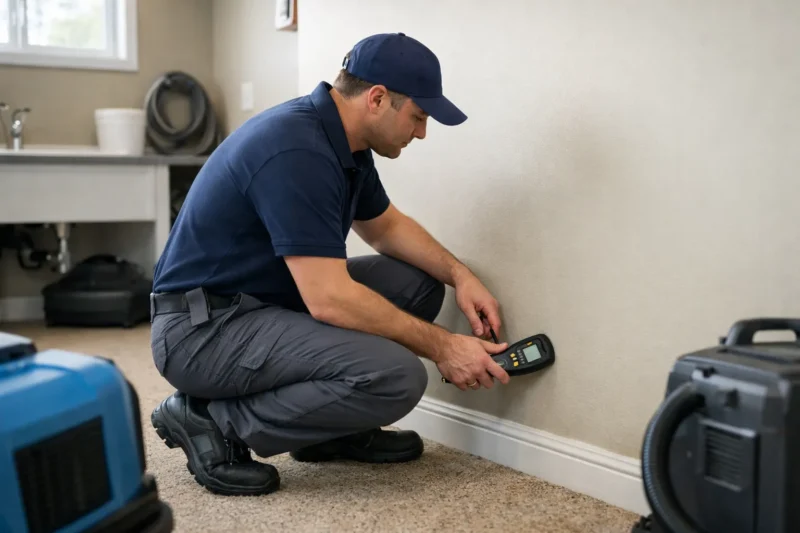
Restoration professionals may use moisture detection tools to help locate damp materials that are not obvious by touch. Findings help determine whether drying, removal, cleaning, or containment may be appropriate.
Documentation can also be useful when you need to understand the scope of damage before repairs. Replacing drywall, flooring, or cabinets before confirming dryness can trap moisture and create future problems.
Recommendations for remediation or drying
If mold remediation is needed, the next step may include containment, removal of affected porous materials, cleaning of salvageable surfaces, and moisture control. For more information about that process, visit the local page for mold removal in Northwest Indiana.
If mold is not found but materials are damp, the recommendation may focus on drying and preventing future growth. Either way, the inspection should give you a clearer path forward.
What You Can Do Before Help Arrives
After a leak, the safest next steps are the ones that reduce moisture without spreading contamination or creating new hazards. If you are unsure whether the water contacted electrical systems, sewage, or hazardous materials, avoid the area and wait for professional guidance.
If it is safe to do so, you can take these steps:
- Stop the water source if you can, such as shutting off a supply valve.
- Move dry belongings away from the affected area.
- Blot or remove small amounts of clean surface water.
- Open interior doors to improve air movement if there is no visible mold.
- Keep children and pets away from damp materials.
- Take photos of visible damage before moving items.
There are also things to avoid. Do not paint over stained drywall, install new flooring over damp subflooring, or use bleach as a cure-all for hidden mold. Bleach may discolor some surfaces, but it does not solve moisture inside porous materials. Do not run household fans across areas with visible mold, because airflow can spread particles.
If the leak involved sewage, toilet backflow, or contaminated floodwater, treat it as a separate safety concern. Mold may become part of the issue later, but the immediate priority is avoiding contact with contaminated water and affected materials.
How to Reduce Future Mold Risk in Northwest Indiana Properties
Once the immediate leak is handled, prevention comes down to moisture control. Northwest Indiana weather can change quickly, so homes and businesses benefit from routine checks before small issues become hidden damage.
Watch common leak points
Inspect plumbing under sinks, behind toilets, around tubs and showers, near water heaters, and around appliance supply lines. Check ceilings below bathrooms and kitchens for new stains. In basements, look for damp corners, foundation seepage, sump pump concerns, and stored items touching exterior walls.
Roof and exterior maintenance also matter. Damaged shingles, clogged gutters, failing flashing, and poor drainage can send water into wall cavities or lower levels. After heavy storms or snowmelt, walk through the property and look for new stains or damp odors.
Control indoor humidity
Bathrooms, laundry areas, kitchens, and basements need good ventilation. Use exhaust fans where available, keep air moving, and address condensation on windows or pipes. If a space repeatedly feels damp, the underlying cause should be evaluated rather than ignored.
Finished basements and storage areas are especially vulnerable when boxes, fabric, wood furniture, and paper goods are kept directly on floors or against walls. Leave room for air circulation and use storage containers that are less likely to absorb moisture.
Do not close up repairs too soon
One of the most common mistakes after a leak is rushing to make the space look normal again. New paint, trim, flooring, or drywall can hide damp materials. Before repairs are completed, confirm that the leak source is fixed and the affected area is dry.
If you are uncertain, a 24/7 mold inspection can give you peace of mind before reconstruction begins. It is much easier to address moisture before materials are sealed behind finished surfaces.
FAQ About 24/7 Mold Inspection After a Leak
Do I need a mold inspection if I cleaned up the water right away?
Maybe. If the water was limited to a hard surface and dried quickly, an inspection may not be necessary. If water reached drywall, carpet padding, cabinets, flooring seams, or a ceiling cavity, a professional inspection is a safer choice.
Can mold grow if I do not see any visible spots?
Yes, mold can grow in hidden areas where moisture remains trapped. A musty odor, staining, warped materials, or a leak that was not discovered right away can all point to a hidden problem. Inspection helps determine whether damp materials are still present.
Should I use bleach on suspected mold after a leak?
Bleach is not a reliable solution for mold inside porous materials such as drywall, wood, carpet, or insulation. It also does not fix the moisture source. If you suspect mold after a leak, avoid disturbing the area and arrange a professional assessment.
Is a mold inspection useful before replacing drywall or flooring?
Yes. Confirming that the area is dry and that mold has not developed can help prevent repairs from covering up an active moisture problem. This is especially important after leaks that affected walls, subfloors, ceilings, or finished basement areas.
Who can I call for mold concerns in Northwest Indiana?
For help after a leak in Gary, Hammond, Portage, Valparaiso, Chesterton, and nearby communities, contact 911 Restoration of Northwest Indiana. Call 911 Restoration of Northwest Indiana at (219) 255-4163 for a 24/7 mold inspection and guidance on the next step.
 English
  Spanish