

Restoration Insurance Claims After Water or Fire Damage in Northwest Indiana
Water or fire damage rarely gives you time to think clearly. A pipe bursts during a cold Northwest Indiana night, heavy rain pushes water into a lower level, or smoke spreads through rooms after a kitchen fire. Once everyone is safe, the next question is usually the same: how do you get help, protect the property, and deal with the insurance claim without making a costly mistake?
Restoration insurance claims can feel complicated because several things happen at once. You may need emergency cleanup, photos, moisture inspections, temporary protection, communication with an adjuster, and a repair plan. The good news is that the process becomes much more manageable when you understand who does what and what information your insurance company will likely need.
In Northwest Indiana communities such as Gary, Hammond, Valparaiso, Portage, Chesterton, and surrounding areas, property damage can come from several common sources: thunderstorms, roof leaks, sump pump problems, appliance failures, frozen or aging plumbing, electrical fires, cooking fires, and smoke migration. The exact coverage depends on your policy, but the steps you take immediately after the loss can make the claim smoother.
What To Do First After Water Or Fire Damage
Your first priority is safety. Do not enter a structure if there is active fire, heavy smoke, a suspected electrical hazard, contaminated water, or structural damage. If emergency services tell you to stay out, wait until the property is cleared for entry.
Once it is safe, focus on limiting additional damage. Most insurance policies expect property owners to take reasonable steps to prevent the loss from getting worse. That does not mean you need to perform dangerous cleanup yourself. It means doing what you safely can while calling qualified help.
Immediate steps after water damage
- Stop the source of water if it can be done safely, such as shutting off a supply valve.
- Avoid rooms where water may have reached outlets, electrical panels, or appliances.
- Move small valuables away from affected areas if the path is safe.
- Take photos or video before major cleanup begins.
- Call your insurance company or agent to report the loss.
- Contact a restoration company for water extraction, drying, and documentation.
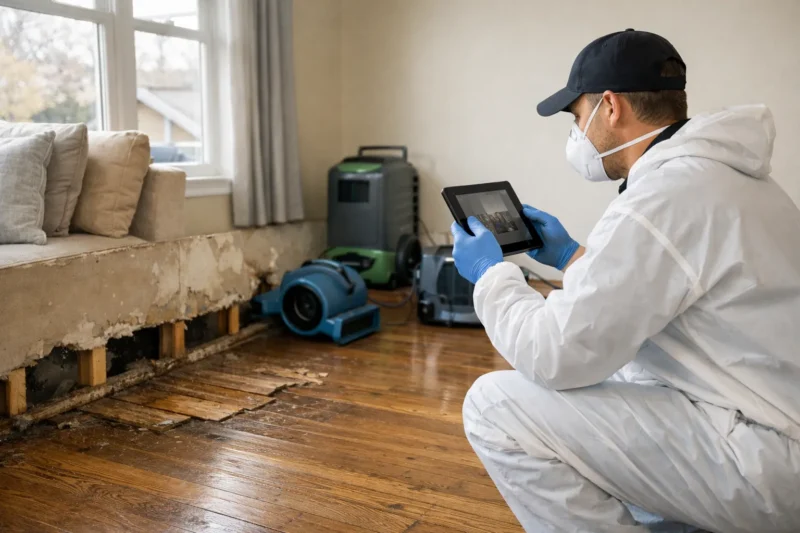
For water losses, speed matters because moisture can travel into flooring, drywall, trim, insulation, and hidden cavities. Professional water damage restoration in Northwest Indiana can include extraction, moisture readings, drying equipment, and documentation that supports the claim file.
Immediate steps after fire damage
- Wait for the fire department or proper authority to confirm the structure is safe to enter.
- Do not wipe soot from walls, ceilings, or contents without guidance, because improper cleaning can set stains.
- Photograph visible damage, smoke residue, affected rooms, and damaged belongings.
- Protect the property from weather or unauthorized entry if openings were created.
- Notify your insurance carrier as soon as practical.
- Ask about next steps for temporary housing if the home is not livable.
Fire losses often involve more than burned materials. Smoke odor, soot, firefighting water, and electrical concerns can extend the scope of work. A team familiar with fire damage restoration in Northwest Indiana can help identify the visible and secondary damage that should be documented.
How Restoration Insurance Claims Typically Work
Every policy and claim is different, but most restoration insurance claims follow a general path. Understanding this sequence helps you know what to expect and what questions to ask.
- You report the loss. The claim begins when you notify your insurance company or agent. You will usually provide the date, cause of damage if known, affected areas, and whether emergency work is needed.
- A claim number is created. Keep this number handy. Restoration companies, adjusters, and other parties may use it when discussing the claim.
- Emergency mitigation begins. Mitigation is the work done to reduce further damage, such as water extraction, drying, board-up, tarping, debris removal, or smoke odor control.
- The damage is documented. Photos, moisture readings, item lists, sketches, and notes may be collected to show what happened and what areas were affected.
- An adjuster reviews the loss. The insurance adjuster evaluates coverage, cause of loss, the damaged building materials, and the estimated cost of covered repairs.
- A scope of work is developed. The scope describes what needs to be cleaned, removed, dried, repaired, or replaced.
- Payments are issued according to the policy. Deductibles, limits, exclusions, depreciation, and mortgage company requirements can affect how and when payments are released.
- Restoration and repairs move forward. Depending on the damage, this may include drying, cleaning, demolition, odor removal, reconstruction, and final walkthroughs.
A restoration company does not decide what your policy covers. That decision belongs to your insurance carrier. However, a restoration team can provide job documentation, estimates, photos, and technical information that helps the adjuster understand the damage and the work needed to return the property to a safe, usable condition.
Documentation That Helps Support Your Claim
Good documentation is one of the most important parts of a damage claim. It creates a clear record of the condition of the property before cleanup, during mitigation, and after restoration work begins. This is especially useful when damage is hidden behind walls, under flooring, or inside cabinets.
Photos and videos
Take wide shots of each affected room, then closer photos of specific damage. For water damage, capture the source if visible, wet flooring, stained walls, warped materials, and damaged personal property. For fire damage, capture burned areas, soot patterns, smoke residue, damaged appliances, and rooms affected by odor or firefighting water.
Do not put yourself in danger for documentation. If a room is unsafe, wait for professionals. Restoration technicians can often document areas during emergency work, especially if materials must be removed quickly to prevent worsening damage.
Lists of damaged belongings
If personal property is affected, start a written list. Include item descriptions, approximate age, and any information you have about purchase price or replacement. If you have receipts, manuals, online order records, or photos from before the loss, save them in a folder.
After a fire, smoke can affect items that do not look burned. After a water loss, porous items may need special evaluation depending on water source and contamination. Your insurance carrier can explain how your policy handles contents, cleaning, replacement, and depreciation.
Moisture readings and technical notes
Water damage is not always obvious by sight. Moisture can remain in subflooring, wall cavities, insulation, and baseboards after the surface looks dry. Restoration documentation may include moisture meter readings, drying logs, room measurements, equipment placement, and notes about materials removed.
These records can be important in Northwest Indiana homes with finished basements, crawl spaces, attached garages, older plumbing, or additions built at different times. Moisture can follow framing, mechanical openings, and flooring layers in ways that are not visible during a quick walkthrough.
How Local Northwest Indiana Conditions Can Affect Claims
Northwest Indiana has a mix of older homes, newer subdivisions, lake-influenced weather, rural properties, and commercial buildings. The restoration and claim process should reflect the actual conditions of the property rather than a generic checklist.
Heavy rain, rapid snowmelt, and storm-driven leaks can affect roofs, foundations, sump systems, and lower levels. Wind can damage exterior materials and allow water into the building envelope. When storms affect multiple homes at once, documentation becomes even more important because property owners may be coordinating with adjusters, roofers, restoration crews, and mortgage companies at the same time.
Storm-related losses may involve more than one type of damage. A roof opening can lead to wet insulation and ceiling stains. A power outage can affect a sump pump. Water intrusion can create humidity that affects nearby rooms. If severe weather is part of the loss, disaster and storm restoration services can help address emergency protection, cleanup, and documentation.
Fire claims also have local building considerations. Older homes may have layers of previous remodeling, plaster, older electrical components, or dense framing that complicates odor removal and repairs. Attached garages can allow smoke to move into living areas. In multi-unit or closely spaced buildings, smoke and water used for firefighting may affect areas beyond the room where the fire started.
The cause of damage matters because insurance policies treat different causes differently. Sudden and accidental water discharge may be evaluated differently from long-term seepage. Fire damage, smoke damage, and damage from firefighting efforts may each need to be documented. Your adjuster is the best source for coverage decisions, but detailed restoration records help show what happened and where the damage went.
Working With The Adjuster And Restoration Team
The adjuster and restoration team have different roles. The adjuster reviews the policy, investigates the claim, and determines coverage based on the facts and policy language. The restoration company evaluates the damage, performs mitigation and cleanup, and provides documentation and estimates for the work it performs or recommends.
Clear communication reduces confusion. Share the claim number with the restoration company. Give the adjuster access to the property when needed. Ask for explanations if the scope of work does not match what you are seeing in the home or business.
Questions to ask your insurance company
- What is my deductible for this type of loss?
- Are emergency mitigation services covered under my policy?
- Do I have coverage for temporary living expenses if the home is not safe to occupy?
- How should I document damaged personal property?
- Does the policy include limits or exclusions that apply to this cause of loss?
- Will payments include depreciation or require additional documentation before final payment?
Questions to ask your restoration company
- What areas are affected based on your inspection?
- What emergency work is needed to prevent additional damage?
- What documentation will be provided for the claim?
- Which materials can be dried or cleaned, and which may need removal?
- How will you communicate changes in the scope if hidden damage is found?
If you want help understanding how restoration documentation fits into the claim process, 911 Restoration of Northwest Indiana provides insurance claim support for restoration projects. The goal is to keep the work organized and make sure the damage is clearly presented to the insurance carrier.
Common Mistakes That Can Slow Down A Claim
After a loss, it is natural to want everything cleaned up immediately. Fast action is important, but certain shortcuts can create claim problems or make damage harder to prove.
- Waiting too long to report the loss. Delays can make it harder to connect the damage to the original event and may allow conditions to worsen.
- Throwing away damaged items too soon. Unless an item is unsafe or must be removed, photograph it first and ask the carrier how to handle disposal.
- Cleaning soot with household products. Soot can smear, stain, or bond to surfaces when cleaned incorrectly.
- Assuming dry-looking materials are actually dry. Water can remain trapped beneath flooring or inside walls.
- Ignoring odors. Smoke odor and moisture-related odors may indicate residue or hidden dampness that needs further evaluation.
- Starting permanent repairs before documentation. Emergency mitigation should not wait, but permanent reconstruction is easier to coordinate when the scope is documented.
- Not reading policy communications. Insurance letters may include deadlines, requested documents, or explanations of payment.
Another common mistake is assuming that every part of the process is automatic. You may need to provide records, answer adjuster questions, review estimates, or approve work. Keeping a simple folder with photos, claim letters, invoices, estimates, and notes from phone calls can prevent confusion later.
What Happens After The Claim Is Approved
Once the carrier completes its review, you may receive an estimate, an explanation of benefits, or a payment based on the covered portion of the loss. Review these documents carefully. If you do not understand a line item, deductible, limit, or depreciation entry, ask the adjuster to explain it.
For water damage, the project may move from emergency drying into repairs such as drywall replacement, flooring work, trim installation, painting, or cabinet repairs. For fire damage, the next phase may include cleaning, odor treatment, removal of unsalvageable materials, reconstruction, and contents handling.
Sometimes hidden damage is discovered after work begins. For example, wet materials may be found behind cabinets, smoke residue may extend into adjacent rooms, or charred framing may become visible during demolition. When that happens, the restoration company can document the discovery and communicate with the adjuster about whether the scope should be reviewed.
If a mortgage company is listed on the policy, larger claim payments may require additional endorsement or inspection steps before funds are released. Your insurance carrier and mortgage company can explain their requirements. Keeping paperwork organized helps avoid unnecessary delays.
The claim is not just about payment. It is about returning the property to a safe, clean, and functional condition. A careful process helps protect the building, supports your claim file, and gives you a clearer path from emergency response to final repairs.
FAQ
Do I need to call insurance before calling a restoration company?
You should report the loss to your insurance company promptly, but you do not always need to wait before requesting emergency mitigation. If water is spreading or the property needs protection after a fire, immediate action can help prevent additional damage. Keep your insurer informed and save all documentation.
Will insurance cover all water or fire damage?
Coverage depends on your specific policy, the cause of the loss, exclusions, limits, and deductibles. Sudden damage is often evaluated differently from long-term or maintenance-related problems. Your adjuster is responsible for explaining what is covered under your policy.
What should I avoid doing after fire damage?
Do not enter until the property is safe, and avoid wiping soot or using household cleaners on smoke-damaged surfaces. Improper cleaning can make stains and odors harder to remove. Photograph the damage and wait for guidance from your insurance carrier and restoration team.
Why are moisture readings important in a water damage claim?
Moisture readings help show where water traveled and whether materials are drying properly. This can support decisions about extraction, drying equipment, material removal, and repairs. It also helps document damage that may not be visible in photos.
Can a restoration company talk to my adjuster?
Yes, restoration companies commonly share estimates, photos, drying logs, and scope information with adjusters when authorized by the property owner. They do not decide coverage, but they can help explain the technical details of the damage and restoration work.
If you are dealing with water or fire damage and need help organizing the restoration process, call 911 Restoration of Northwest Indiana at (219) 255-4163.