Commercial Water Damage Restoration for Northwest Indiana Businesses
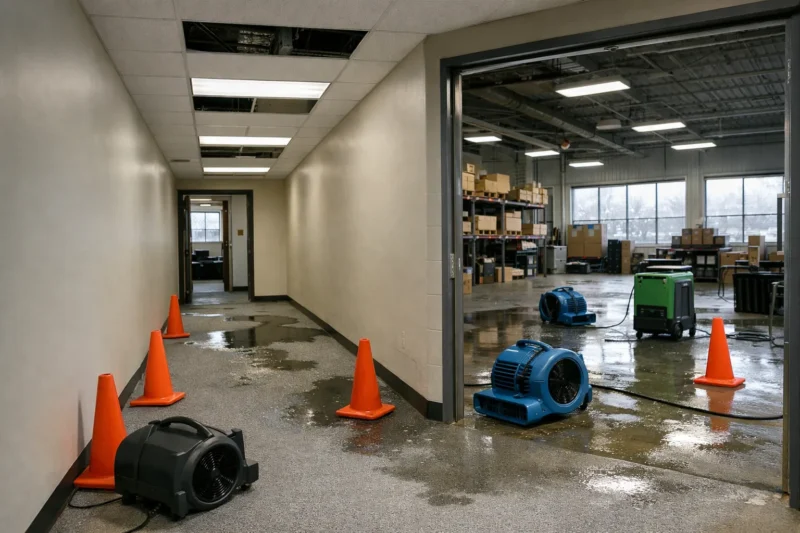
A leak in a commercial building rarely stays small for long. Water can travel under flooring, into wall cavities, across inventory areas, and through ceiling systems before anyone sees the full extent of the problem. For a Northwest Indiana business, that can mean interrupted production, closed office space, unsafe walking surfaces, damaged stock, and difficult conversations with tenants, employees, or customers.
The goal of commercial water damage restoration is not only to remove visible water. It is to stabilize the property, identify where moisture has gone, dry affected materials safely, reduce secondary damage, and help the business reopen usable areas as soon as conditions allow. A fast, organized response can make the difference between a contained disruption and a prolonged shutdown.
Whether the source is a roof leak during heavy rain, a broken supply line, a backed-up floor drain, or water from snow and ice melt, the steps you take in the first phase matter. Business owners and property managers in Hammond, Gary, Portage, Valparaiso, Chesterton, and surrounding communities can use the guidance below to protect people, limit damage, and keep the recovery process moving.
Why Commercial Water Damage Happens in Northwest Indiana
Northwest Indiana has a mix of older commercial corridors, industrial properties, warehouses, retail centers, offices, restaurants, municipal buildings, and multi-tenant spaces. Each property type has its own water risks, and local weather can add pressure to aging roofs, drainage systems, and plumbing.
Businesses near Lake Michigan and throughout the region can see strong storms, wind-driven rain, lake-effect snow, freeze-thaw cycles, and rapid temperature swings. Those conditions can expose weaknesses in flat roofs, roof drains, exterior masonry, door thresholds, loading docks, and mechanical penetrations. In winter, unheated or poorly insulated areas can also make plumbing more vulnerable.
Common sources of commercial water damage include:
- Broken or leaking supply lines in restrooms, kitchens, utility rooms, and tenant spaces
- Roof leaks around drains, seams, flashing, skylights, or rooftop equipment
- Overflowing toilets, sinks, water heaters, or appliance lines
- Sprinkler system discharge or leaking fire suppression piping
- Stormwater entering through doors, loading areas, foundation openings, or clogged drainage paths
- Backed-up floor drains or sewer lines in lower-level or production areas
- Slow leaks hidden above ceilings, behind walls, or under commercial flooring
Because commercial buildings often have larger footprints and complex mechanical systems, water can spread farther than it would in a typical home. A small visible puddle may be connected to a larger moisture path inside building materials, especially if the leak started after hours or in a rarely used area.
What to Do First When a Leak Threatens Business Operations
The first priority is safety. Do not send employees into areas where water may be touching electrical equipment, where ceiling materials are sagging, or where the water may contain sewage or chemicals. If there is any doubt about structural, electrical, or contamination risk, keep people out of the area until it can be evaluated.
Once immediate hazards are addressed, take practical steps to limit the spread of damage:
- Stop the source if it is safe. Shut off a local valve, isolate a fixture, or contact building maintenance if the leak is active and accessible.
- Protect people from slip hazards. Block off wet areas, redirect foot traffic, and use caution around tile, polished concrete, and entry mats.
- Move vulnerable items. Relocate paper files, electronics, stock, tools, and porous materials away from the affected area when it can be done safely.
- Document the scene. Take photos and notes before moving major items, especially if you expect to file an insurance claim.
- Avoid spreading contamination. Do not drag wet debris, sewage-affected materials, or soaked boxes through unaffected areas.
- Call for professional help promptly. The longer moisture remains in building materials, the more complicated the restoration can become.
If the damage is beyond a small, clean-water spill, professional water damage restoration services can help determine where the water traveled and what must be dried, cleaned, removed, or monitored.
How Commercial Water Damage Restoration Reduces Downtime
Commercial water damage restoration is most effective when it is planned around both the building and the business. A warehouse, restaurant, medical office, school, retail store, and office suite may all need different priorities. The work has to address moisture correctly while also considering customer access, employee safety, tenant communication, inventory protection, and business continuity.
Moisture Inspection and Damage Mapping
Visible water is only part of the problem. Moisture can move under carpet tile, into drywall, behind baseboards, beneath vinyl flooring, and through ceiling assemblies. A restoration team evaluates the source, the water path, the materials involved, and any contamination concerns.
This inspection helps identify which areas are affected, which can remain open, and which should be isolated. For a property manager, that distinction is important. If the damage is limited to a portion of the building, it may be possible to keep unaffected areas available while restoration continues in the damaged zone.
Water Extraction and Controlled Drying
Standing water needs to be removed before drying can begin. Extraction can reduce the amount of moisture trapped in carpet, padding, flooring systems, and other materials. After that, drying equipment may be placed to move air and manage humidity in affected spaces.
Controlled drying is not guesswork. Commercial buildings often contain multiple materials layered together, and each may dry differently. Drywall, insulation, wood framing, concrete, masonry, and commercial flooring all require careful evaluation. The objective is to bring affected materials to an acceptable dry condition when they can be saved and to remove materials that cannot be safely restored.
Cleaning, Sanitizing, and Odor Control
Not every water loss is the same. Clean water from a supply line is very different from water that has passed through a sewer line, floor drain, or exterior flooding route. If the water is contaminated, cleanup may require removal of porous materials, sanitization of affected surfaces, and additional precautions to protect employees and occupants.
Even when the water starts clean, odors can develop if moisture remains trapped. Prompt drying and cleaning help reduce musty smells and lower the risk of mold growth in wall cavities, flooring, and storage areas.
Contents, Inventory, and Equipment Considerations
For many businesses, the building is only part of the loss. Product inventory, documents, tools, fixtures, furniture, shelving, and equipment may be affected. Restoration planning should include a contents strategy that separates salvageable items from items that need disposal, cleaning, drying, or further evaluation.
Electronics, production equipment, and specialty machinery should not be powered on until they are checked by appropriate professionals. Water-damaged equipment can create safety risks or hidden failures even if it appears dry on the outside.
Building a Downtime Reduction Plan Before Restoration Starts
After a leak, the fastest path is not always the smartest path. Rushing work without controlling moisture can lead to recurring odor, mold concerns, damaged finishes, and repeated disruption. A better approach is to create a practical plan that aligns restoration tasks with business priorities.
For larger or multi-tenant properties, professional commercial property damage restoration support can help coordinate the building-related work while owners and managers focus on operations.
Prioritize Critical Areas
Identify the spaces that matter most to daily operations. These may include customer entrances, point-of-sale areas, offices with essential systems, production lines, server rooms, exam rooms, kitchens, or loading docks. When possible, restoration tasks can be sequenced to address the most important operational areas first.
Prioritization also helps with communication. Employees and tenants need to know which areas are off limits, which areas are safe to use, and what temporary changes are in place.
Separate Affected and Unaffected Areas
Containment can help prevent foot traffic, dust, debris, or odors from spreading into unaffected spaces. Depending on the situation, this may involve closing doors, redirecting access paths, covering openings, or establishing separate work zones.
Clear boundaries help businesses maintain order during a stressful event. They also reduce the chance that employees or customers accidentally enter a wet or unsafe area.
Plan for Temporary Operations
If a portion of the building must close, consider temporary options. Some businesses can shift workstations, use alternate entrances, adjust deliveries, move inventory, or reroute customers to a clean section of the property. Multi-location businesses may be able to transfer certain tasks temporarily.
The restoration plan should support these operational decisions when feasible. For example, if a wet storage area is not customer-facing but an entry corridor is affected, reopening the corridor may be the first priority once it can be done safely.
Keep Communication Simple and Current
Water damage creates uncertainty. Staff may not know where to work, customers may be confused by blocked-off areas, and tenants may need updates. Short, direct communication can reduce frustration.
Useful updates include:
- Which areas are closed or restricted
- Where employees or customers should enter
- Whether deliveries should be redirected
- Who is the point of contact for questions
- What items employees should not touch or move
A single internal contact person can help prevent mixed messages and keep restoration questions organized.
Insurance Documentation for Commercial Water Losses
Commercial water losses often involve several categories of damage: the structure, tenant improvements, contents, inventory, records, business equipment, and sometimes loss of use. Good documentation can make the claim process easier to manage.
Before cleanup changes the scene, document the affected areas when it is safe to do so. Take photos of the source if visible, wet flooring, stained ceilings, damaged walls, soaked contents, and any business items that may need evaluation. Keep damaged items available until your insurer or adjuster provides direction, unless they present a safety or sanitation hazard.
Helpful records may include:
- Photos and videos from the first discovery of damage
- Notes about when the leak was found and who was notified
- Maintenance records for plumbing, roofing, drains, or equipment involved
- Lists of damaged inventory, supplies, fixtures, or business property
- Invoices, work authorizations, and restoration documentation
- Communications with tenants, employees, vendors, or building management
If you are unsure how to organize the claim, reviewing the restoration insurance process can help you understand what information is commonly needed during a property damage claim.
Business owners should also review their own policy language and speak with their insurance representative about coverage questions. Restoration providers can document building conditions and work performed, but coverage decisions are handled through the insurance process.
Preventing Future Commercial Water Damage
Not every leak can be prevented, but routine maintenance can reduce risk and help your team catch problems earlier. This is especially important for properties that sit vacant on weekends, have seasonal occupancy changes, or include large mechanical and storage areas that employees do not inspect daily.
Roof, Drainage, and Exterior Checks
Flat and low-slope commercial roofs need regular attention. Debris around roof drains, damaged flashing, worn seals around rooftop equipment, and ponding water can all contribute to interior leaks. After strong storms or heavy snow and ice events, building staff should check for stained ceiling tiles, new drips, wet insulation, or unusual odors.
Exterior drainage matters as well. Downspouts, surface grading, loading areas, and doorway thresholds should direct water away from occupied space whenever possible. If water regularly pools near entrances or dock areas, it is worth investigating before the next heavy rainfall.
Plumbing and Mechanical Areas
Restrooms, kitchens, utility sinks, water heaters, boiler rooms, and mechanical spaces should be inspected for slow leaks, corrosion, damp flooring, and staining. A small drip in a closet or ceiling space can create a much larger issue if it continues unnoticed.
Make sure employees know how to report water concerns quickly. A simple internal reporting process can help a maintenance team respond before water spreads into neighboring suites or shared corridors.
Floor Drains, Sewer Lines, and Backflow Concerns
Commercial properties with floor drains, production areas, kitchens, or lower-level utility rooms should pay close attention to drain performance. Slow drainage, recurring odors, gurgling sounds, or backups should not be ignored. Water that comes from a sewer or drain backup can require a different cleanup approach than clean water from a supply line.
If your business has had repeated drain problems, consult qualified plumbing support and keep maintenance records. Those records can be useful if future property damage occurs.
Mold Awareness After Water Intrusion
Moisture left behind after a leak can create conditions where mold may develop. Businesses should watch for musty odors, recurring stains, warped baseboards, soft drywall, or employee reports of damp conditions. The best prevention is prompt drying and verification that hidden materials are not staying wet.
For businesses spread across multiple towns, it can also help to know which restoration support is available in your area. 911 Restoration of Northwest Indiana serves communities listed among its service areas across Northwest Indiana, including industrial, retail, office, and other commercial properties.
When a Business Should Call for Commercial Water Damage Restoration
Some spills can be handled by in-house maintenance, especially if the water is clean, limited, and cleaned up immediately. But commercial properties should bring in professional help when the source is uncertain, the water covers a large area, materials remain damp, or business operations are affected.
Call for commercial water damage restoration when you notice:
- Standing water in offices, hallways, retail areas, warehouses, or utility rooms
- Water dripping through ceiling tiles or light fixtures
- Wet drywall, insulation, carpet, baseboards, or built-in cabinetry
- Water near electrical panels, outlets, machinery, or server equipment
- Any sewage backup, drain overflow, or contaminated water
- Musty odors after a leak or previous water intrusion
- Repeated leaks from the same roof, wall, fixture, or drain line
- Damage affecting tenants, customers, employees, or required business access
Waiting can make the disruption harder to control. Moisture can migrate farther, more materials may need removal, and odors can become more difficult to resolve. A timely assessment gives you a clearer picture of what is damaged, what can be saved, and how restoration can be sequenced around your business needs.
FAQ
How quickly should a business respond to water damage?
Respond as soon as the problem is discovered. Water can move into walls, flooring, and contents quickly, and commercial buildings often have hidden cavities where moisture can linger. If the source is active or the water may be contaminated, restrict access and call for professional guidance promptly.
Can my business stay open during commercial water damage restoration?
It depends on the location, source, contamination level, and safety conditions. Some businesses can keep unaffected areas open while damaged areas are isolated, but others may need to close portions of the property. A restoration plan should prioritize safety first and then look for ways to reduce operational disruption.
Is water from a floor drain or sewer backup different from a pipe leak?
Yes. Water from a sewer line, floor drain backup, or other contaminated source can carry health risks and may require specialized cleanup, material removal, and sanitization. Employees should avoid contact with that water and keep traffic away from the affected area.
What should I document for an insurance claim after a commercial leak?
Take photos or videos of the source, affected rooms, damaged materials, and impacted business property when it is safe. Keep notes about when the damage was discovered, who was notified, and what steps were taken to limit further damage. Save invoices, maintenance records, and communication related to the event.
Who should Northwest Indiana businesses call after a serious leak?
If your commercial property has standing water, wet building materials, sewage, or moisture affecting operations, professional restoration support can help stabilize the situation. For help with commercial water damage restoration, contact 911 Restoration of Northwest Indiana at (219) 255-4163.
 Spanish
 English